All-on-4 Dental Implants in Front Royal: A Long-Lasting Solution for Missing Teeth
Losing most or all of your teeth can affect more than how you eat. It changes how you talk, how you feel in a room, and sometimes whether you want to be in that room at all. If you've been living with loose dentures or several missing teeth, you may have wondered if there's a better option. All-on-4 dental implants offer many patients a fixed, long-lasting solution — and I want to walk you through what that actually means.
What Are All-on-4 Dental Implants?
All-on-4 is a technique that supports a full arch of teeth using just four implants placed in your jawbone. Two implants go toward the front of the jaw, where bone is typically denser, and two are angled toward the back. That angle is intentional — it lets us get a strong foundation even when there's been some bone loss in the rear of the jaw, which often happens after teeth are missing for a while.
The result is a fixed set of teeth that stays in your mouth. No removing it at night, no adhesives, no worrying about it shifting when you're talking or eating. Many patients also receive a temporary set of teeth on the same day as the procedure, so you're not leaving the office without something to smile with.
You can learn more about how this works on our All-on-4 and full-arch restoration page.
How the Process Works, Step by Step
Every person's mouth is different, so we always start with a full evaluation before anything else. That means X-rays, often a CBCT scan, and a real conversation about your health history and what you're hoping to get out of treatment. From there, we build a plan that fits your specific anatomy — not a one-size-fits-all approach.
The Placement Appointment
The surgery itself is done with local anesthesia, so the area is fully numb before we begin. We place four implants in carefully mapped positions, and in many cases, a temporary prosthesis is attached the same day.
Healing and Integration
Over the next several months, your jawbone gradually fuses with the implants — a process called osseointegration. This is what gives the implants their stability. Once healing is complete, the temporary teeth are replaced with a final set made from durable materials like zirconia or acrylic bonded to a titanium framework.
Treatment timelines vary based on individual needs and clinical factors.
Ready to get started? Schedule a visit with Front Royal Dental Group.
What the Research Shows
This isn't a new technique. All-on-4 has been studied for decades, and the results have held up well over time.
Long-term clinical data shows strong prosthetic survival rates in both the upper and lower jaw, and studies tracking outcomes over 10 years or more have found consistently high success rates. It is a well-established option for full-arch rehabilitation in suitable candidates.
Individual results vary based on factors like overall health, oral hygiene habits, and whether the patient smokes. We'll always give you an honest picture of what to expect for your specific situation.
Who Is a Good Candidate?
All-on-4 is typically a fit for people who have multiple missing or failing teeth and want a fixed solution. Patients who are unhappy with removable dentures — especially those that shift or feel unstable — often find this option meaningful. There's no upper age limit; many older patients do very well with this treatment.
A few things can affect whether someone is a good candidate:
- Bone density: We need enough bone in the front of the jaw to anchor the implants. Posterior bone loss can often be worked around with the angled placement technique.
- Overall health: Conditions like diabetes or osteoporosis are factors we discuss carefully. They don't automatically rule someone out, but they do require close attention.
- Smoking: Smoking affects how well the bone heals around the implants. We typically ask patients to stop smoking, or at least significantly reduce it, before and after treatment.
If you're curious about whether you might be a candidate, our dental implants page has more background, and we're always happy to talk through your situation directly.
A Note on Cost
All-on-4 costs more upfront than removable dentures. That's worth being honest about. But when you factor in the ongoing costs of denture adhesives, relines, and replacements — along with the functional and quality-of-life differences — many patients find the total over time lands closer than they expected.
Here's how the number gets set. After the exam and the 3D scan, we write out what your case actually calls for: how many implants, whether any groundwork is needed first, and what goes on top. That written estimate separates what your plan is expected to pay from what you'd pay, and we go over it with you before anything is scheduled. If the whole plan isn't right for now, treatment can usually be phased, and financing options can spread the balance into monthly payments.
Frequently Asked Questions
How long do All-on-4 implants typically last? With good oral hygiene and regular check-ups, the implants themselves often last many years — sometimes decades. The prosthesis (the teeth attached to the implants) may need to be replaced or adjusted over time. Clinical studies have shown strong success rates at the 10-year mark and beyond, though individual outcomes vary.
Is the procedure painful? The procedure is done under local anesthesia, and we explain what you will feel at each step so there are no surprises. Afterward, some soreness and swelling are normal and typically manageable with prescribed or over-the-counter medication. Most patients are surprised by how comfortable the recovery can be.
Can I eat normally with All-on-4 implants? Most patients can eat a much wider range of foods compared to removable dentures. During the healing period, we'll recommend softer foods. Once the final prosthesis is placed, chewing function typically feels much closer to natural teeth.
What if I've had dentures for years — am I still a candidate? Possibly, yes. Bone does tend to shrink over time when teeth are missing, but the All-on-4 technique is specifically designed to work with the bone that's typically available in the front of the jaw. A scan and evaluation will tell us what we're working with and whether this option could work for you.
If you have questions about All-on-4 or want to understand whether it might be a good fit, we're here to help. You can reach our team at Front Royal Dental Group, and we'll take it one step at a time together.
Have questions? Call us at (540) 636-2003.
See also:
More from Our Blog
Root Canal or Pull the Tooth? What Each Choice Costs You Later
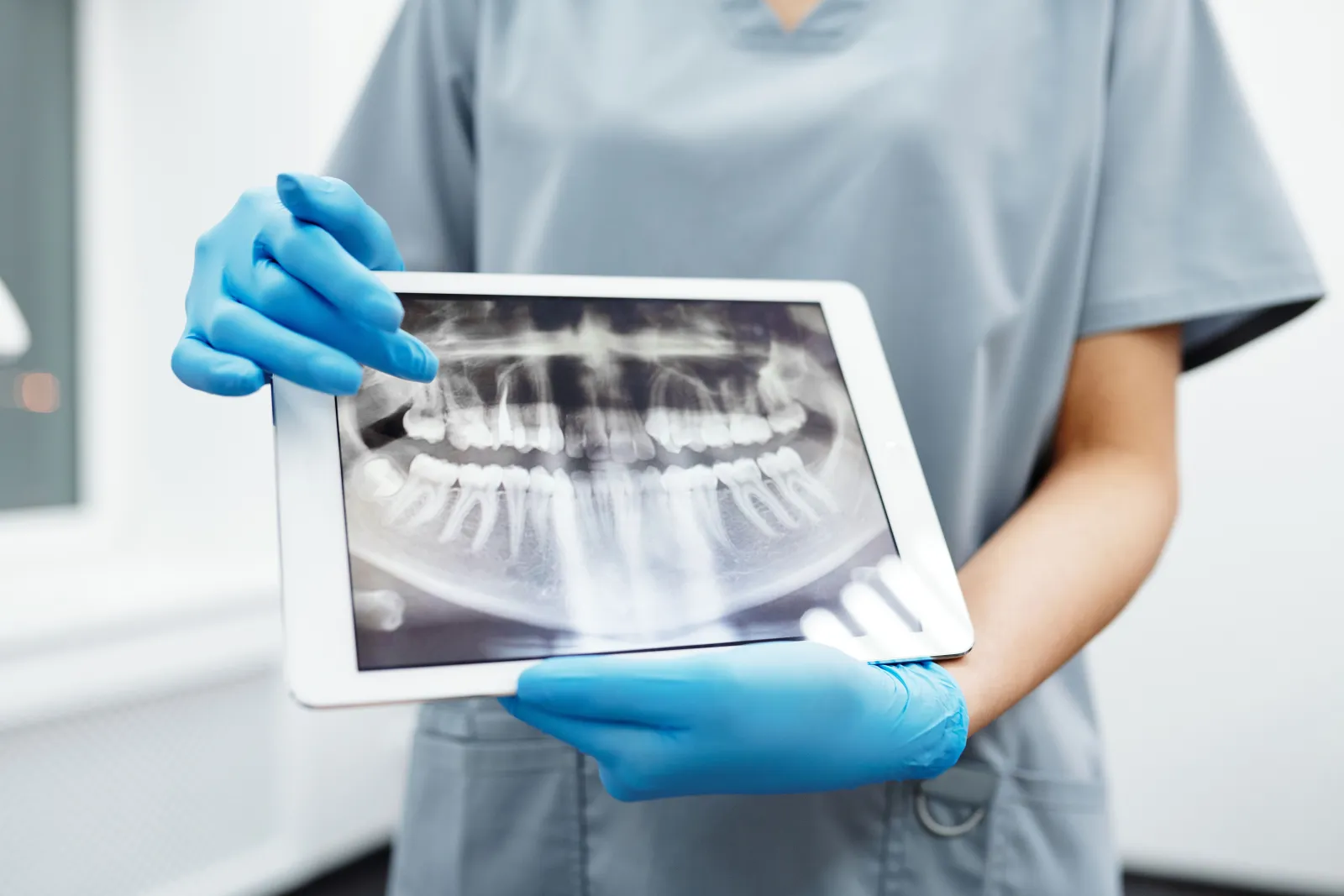
Removing a back tooth ends the infection, but the gap keeps changing your mouth: the bone shrinks and the teeth around it move. A root canal keeps the tooth in place, and a back tooth then needs a crown to stop it splitting.
Read more
Is Fluoride Bad for You? What the Dose Actually Decides
Fluoride's harms show up at doses well above the 0.7 mg/L recommended for US tap water. Here are the numbers, what each one protects against, and what is still unsettled.
Read more
How Much Does All-on-4 Cost? What 'Per Arch' Means on Your Quote
An All-on-4 quote prices one jaw as one custom-built unit. What it costs depends on the lines inside: the implants, the 3D scan and surgical guide, extractions and grafting, the provisional teeth, and the bridge material.
Read more