Clear Aligners vs. Braces: How to Choose in Front Royal, VA
Choosing between clear aligners and traditional braces is one of the questions I hear most often from patients here in Front Royal. There's no single right answer — and honestly, that's a good thing. It means we look at you specifically, not just a general rule, to figure out what fits your teeth, your lifestyle, and your goals.
Let me walk you through what each option actually involves, what the research says, and how we think about this decision together.
First, What We Provide Here
Front Royal Dental Group provides clear aligner treatment. We don't place braces.
I'd rather you know that before you read another line, because a good part of this page describes a treatment you'd receive somewhere else. I've still written that part honestly. A comparison that only flatters the option I happen to offer isn't a comparison, and it wouldn't help you decide anything.
If your exam points to braces, I'll say so and refer you to a practice that places them. Treatment steered down the wrong path costs you months and still lands short of where you wanted to be, and there's nothing in that for either of us.
How Each Option Works
Clear Aligners
Clear aligners are a series of custom-made plastic trays. You wear each set for about one to two weeks, and each tray moves your teeth a small amount until they gradually reach the desired position. You take them out to eat and brush, which many patients appreciate.
Small tooth-colored attachments are sometimes bonded to certain teeth to help the trays grip and guide movement more precisely. The trays are discreet — most people won't notice them unless they're looking closely.
Traditional Braces
Braces use brackets bonded to your teeth, connected by wires that are adjusted over time to shift teeth into position. Modern braces are much smaller and more refined than older designs. Ceramic brackets offer a more subtle look, and self-ligating systems can reduce friction throughout treatment.
The real advantage of braces is where the force gets applied. Each bracket is bonded to the tooth and the wire is held inside the bracket, so the wire can rotate a tooth as well as drag it sideways. That is what gives control over the root and not only the part of the tooth you see in the mirror — the movements that need it are the deep rotations, the tooth that has tipped over, and the one that has to be brought down out of the gum. A removable tray has nothing to hold but the outside of the crown, which is exactly where its reach ends.
Braces also work continuously. There's no wear time to keep up with, because the appliance doesn't come off until treatment is finished.
What the Research Actually Shows
Both options work well. Studies show that clear aligners and braces produce comparable results for most patients, though the details matter depending on your specific situation.
For mild to moderate crowding, spacing, and minor bite issues, many patients do very well with clear aligners. Braces tend to have a clinical advantage for more complex movements, like significant bite corrections or precise root positioning. Clear aligner treatment often moves quickly for straightforward cases, though timelines vary widely depending on the individual and the complexity of what needs to move.
Patient satisfaction scores also tend to be higher with aligners, largely because of comfort and aesthetics. But satisfaction with braces is still strong, especially for patients who want a treatment that doesn't depend on them remembering to put the trays back in.
Treatment timelines vary based on individual needs and clinical factors.
Ready to get started? Schedule a visit with Front Royal Dental Group.
The Compliance Factor with Clear Aligners
This is something I'm always honest about with patients. Clear aligners only work when you wear them — typically 20 to 22 hours a day. That sounds manageable, and for many people it is. But life gets busy, trays get left on restaurant tables, and some patients find the discipline harder than they expected.
If you're consistent, aligners can work beautifully. If compliance is a real concern for you — and there's no shame in knowing yourself — braces remove that variable entirely. They're working around the clock regardless.
Oral Hygiene During Treatment
One area where aligners have a clear advantage: keeping your teeth clean. You remove the trays to brush and floss, so your routine stays almost exactly the same.
With braces, brushing and flossing takes more attention. Food can get caught around brackets, and if teeth aren't cleaned carefully throughout treatment, you can end up with gum irritation or white spots on the enamel. It's very manageable with the right habits, but it's worth knowing going in.
Which Option Might Be Right for You
There's no one-size-fits-all answer here, so I'll give you a general picture:
- Clear aligners often work well for adults and teens with mild to moderate alignment concerns who want a discreet option and can commit to wearing the trays consistently.
- Traditional braces may be the better fit for more complex cases, younger patients, or anyone who prefers a treatment that doesn't require daily discipline around wear time.
Some cases genuinely work well with either option. That's when your personal preferences carry the most weight.
If yours sits squarely in the braces group, trays aren't a softer route to the same finish. They're built for a different set of movements, and asking them to do work they can't reach is how people end up disappointed a year in. That's the point where I hand you a referral instead of taking the case.
You can learn more about our clear aligners options, including what the process looks like at our practice, before you come in.
Making the Decision Together
When a patient comes in asking about orthodontic options, I don't start by recommending a product. I start by looking at what's actually going on with their teeth and asking what matters most to them. Do they want something discreet? Are they worried about keeping up with wear time? Are they dealing with a bite issue that needs precise correction?
Those answers shape everything. My goal is always to make sure you understand your options clearly, without feeling pressured in either direction. You're the one making this decision, and I'm here to help you make an informed one.
That conversation ends one of two ways, and neither one is a bad afternoon. Either your case suits aligners, in which case we plan it here and you see the movement mapped out before you agree to anything — or it doesn't, and you leave knowing why, with a referral to a practice that places braces.
Frequently Asked Questions
Do you place braces at your office? No — clear aligners are the only straightening treatment we do here. If the exam points at braces for your teeth, you'll hear that from me, and you'll leave with a referral to a practice that places them.
Can adults get braces, or are they mostly for teenagers? Adults get orthodontic treatment all the time — and both braces and clear aligners work well for adults. Many adult patients prefer clear aligners for the discreet look, but braces are a solid option too, especially for more complex cases. Age isn't a barrier.
Will aligners or braces affect what I can eat? With clear aligners, you remove the trays before eating, so there are no food restrictions. With braces, you'll want to avoid hard, sticky, or crunchy foods that can damage brackets or wires. It's a real consideration if you have strong food preferences.
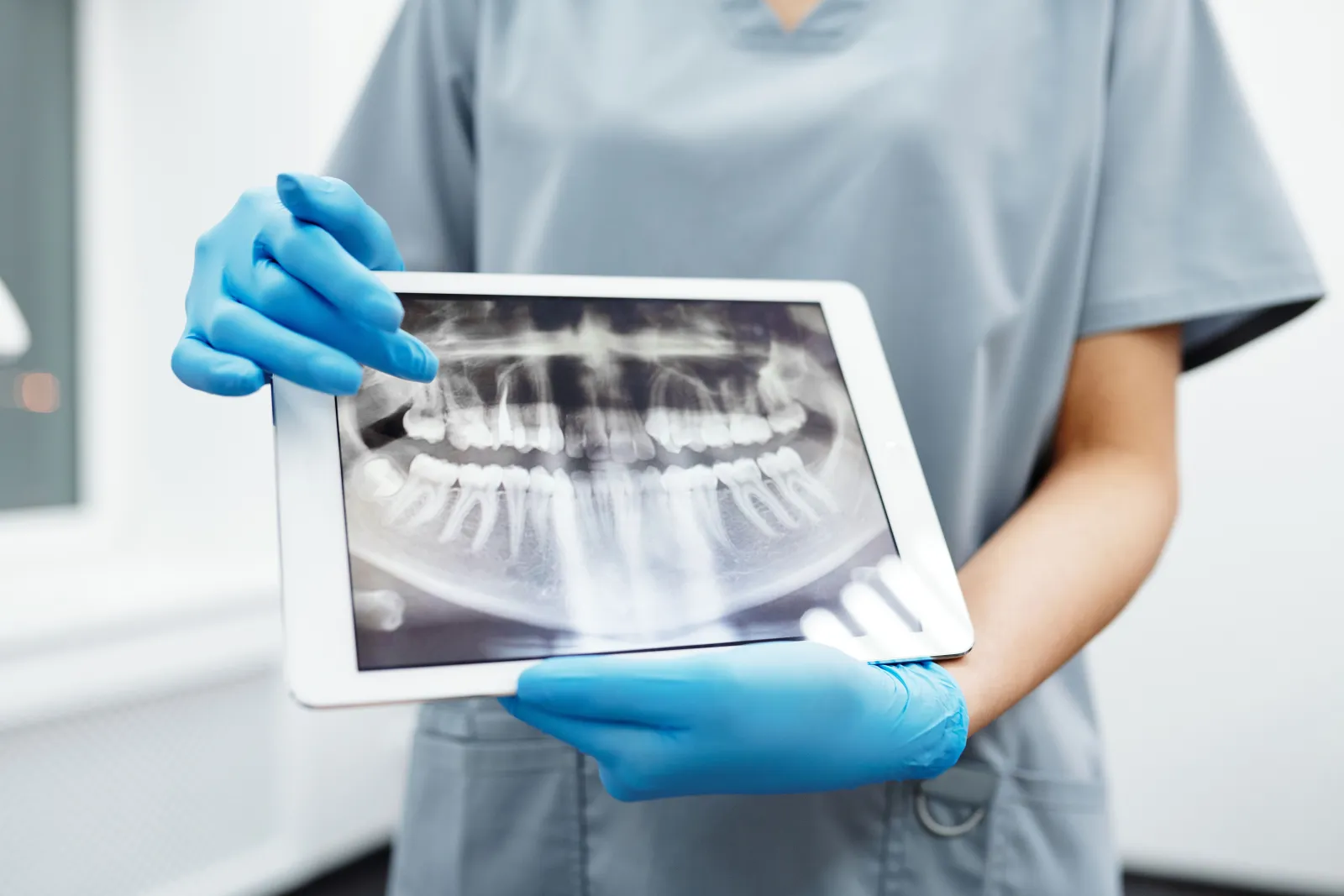
How do I know if my case is simple or complex? Honestly, you won't know without an exam. What looks like a minor crowding issue sometimes has bite components underneath it. That's why we take X-rays and photos before recommending anything — it gives us the full picture.
Does insurance cover clear aligners or braces? Many dental and orthodontic plans include some coverage for both options, though the amount varies. For aligner treatment here, we'll verify your benefits with your carrier rather than guess from the card, then write out an estimate after the exam that separates what your plan is expected to pay from what you'd pay. Nothing gets scheduled before you've read it. If you end up going the braces route elsewhere, that office handles its own benefit check, and it's worth asking about it at the first visit.
If you have questions about which direction might make sense for your teeth, we're here to help. There's no obligation, and no question is too small. We'll take it step by step.
Have questions? Call us at (540) 636-2003.
See also:
More from Our Blog
Root Canal or Pull the Tooth? What Each Choice Costs You Later
Removing a back tooth ends the infection, but the gap keeps changing your mouth: the bone shrinks and the teeth around it move. A root canal keeps the tooth in place, and a back tooth then needs a crown to stop it splitting.
Read more
Is Fluoride Bad for You? What the Dose Actually Decides
Fluoride's harms show up at doses well above the 0.7 mg/L recommended for US tap water. Here are the numbers, what each one protects against, and what is still unsettled.
Read more
How Much Does All-on-4 Cost? What 'Per Arch' Means on Your Quote
An All-on-4 quote prices one jaw as one custom-built unit. What it costs depends on the lines inside: the implants, the 3D scan and surgical guide, extractions and grafting, the provisional teeth, and the bridge material.
Read more