Maybe someone told you veneers wreck your teeth for life, or you saw a clip of front teeth filed down to small stumps. Underneath both is a simpler question: if I get veneers, am I stuck with them for the rest of my life?
So do veneers ruin your teeth? No, but they are a real tradeoff, and the honest answer has two parts. Porcelain veneers usually need a thin layer of enamel removed. Enamel does not grow back, so that tooth will always need some kind of covering. How deep that preparation goes, and whether it stays in enamel, then changes how well the veneer holds for years afterward.
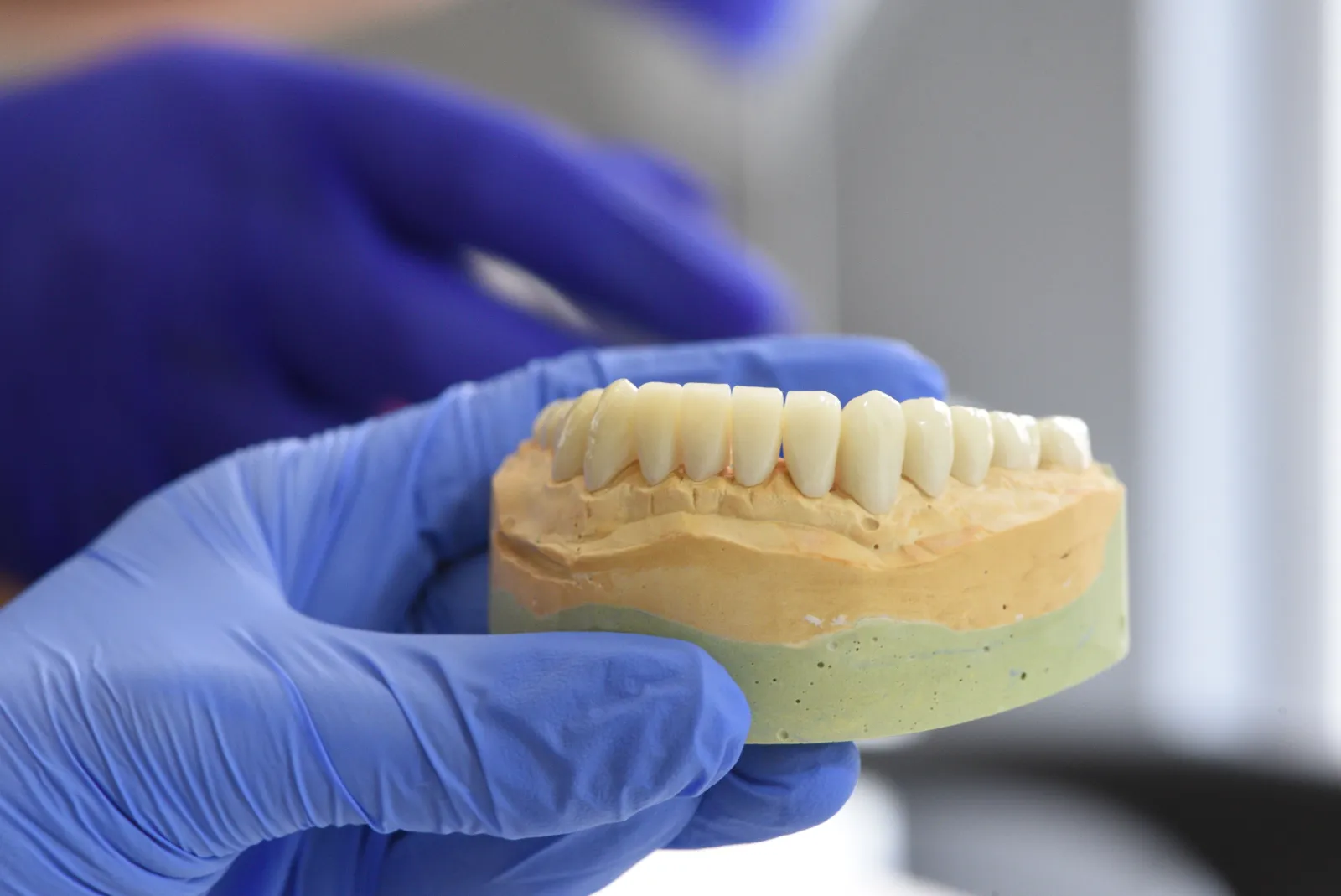
Filing a tooth down to a stump prepares it for a crown, which wraps around every side, while a veneer covers only the front.
Do veneers ruin your teeth?
Enamel is the hard, glassy outer shell of a tooth, and on your front teeth it is thinner than most people expect. A 2014 study that measured 20 extracted upper front teeth found that enamel on a central incisor averaged about 0.41 mm thick near the gum. Near the biting edge it averaged about 0.95 mm. On the narrower teeth beside them, it was as thin as 0.24 mm near the gum.
Under the enamel sits dentin, a softer, wetter layer full of tiny channels that run toward the nerve.
To hold a veneer, the dentist first etches the enamel with an acid gel, which turns its smooth surface into a microscopic honeycomb. Bonding resin flows into that honeycomb and locks in as it hardens, which is why a veneer bonded to enamel holds so firmly. Dentin contains collagen and fluid, so the same resin grips it less reliably. A 1992 paper on enamel thickness for veneers puts it plainly: resin bonds better with enamel than with dentin.
In a study that followed 580 porcelain veneers for up to 12 years, veneers bonded to dentin were about 10 times more likely to fail. When the preparation stayed entirely in enamel, 99% of the veneers survived.
The same 1992 paper recommends 0.5 mm of enamel preparation for a porcelain veneer. Taken evenly across the front of a tooth, that cut would go deeper than the enamel the 2014 study found near the gum. In that study, one common way of shaping the veneer's edge near the gum exposed dentin in more than half the teeth prepared that way. So the question to ask about any veneer plan is how much enamel it removes, and from where.
Why does the amount of enamel removed differ from person to person?
A veneer needs room, because porcelain has to reach a certain thickness to be strong. How much room your teeth need depends on three things, and each one varies from mouth to mouth.
-
Where the tooth sits: a tooth that leans forward has to lose more from its front surface to line up with its neighbors. A small, worn or tucked-back tooth has space in front of it, so a minimal-prep or no-prep veneer can add thickness without much cutting.
-
How dark the tooth is: thin porcelain lets light through, so on its own it cannot hide a very dark tooth. Covering deep color takes a thicker veneer, and a thicker veneer needs more room.
-
How big the change is: brightening well-shaped teeth needs far less room than reshaping crooked or uneven ones.
Sometimes the way to save the most enamel is to move the tooth first. Clear aligners can bring a forward tooth back into line, so less has to come off later.
Planning the final shape first helps for the same reason: the dentist can measure the preparation from the new surface instead of the old one. Wherever the new shape sits in front of your current tooth, there may be nothing to remove at all.
What happens if a veneer chips or comes loose years later?
Porcelain veneers last a long time, but not forever. In a study of 318 porcelain veneers followed for up to 20 years, estimated survival was 93.5% at 10 years and about 83% at 20. The most common failure was a fracture in the porcelain itself.
A review that pooled 13 studies found chipping or fracture in 4% of veneers, and debonding, a veneer coming loose, in 2%. Nerve problems in the tooth underneath showed up in 2%.
When a veneer fails, the American Dental Association notes that your dentist will re-bond, repair or replace it. What does not happen is a return to your bare tooth, because that enamel was shaped to hold a covering. That is the real commitment: the tooth needs a veneer, or later a crown, from then on.
Two things raise the risk of a veneer failing, and you can do something about both.
-
Grinding: in the 20-year study, people who grind their teeth had a 7.7 times greater risk of a veneer failing. A custom night guard puts a layer between upper and lower teeth, so the grinding force lands on the guard instead of the porcelain.
-
The edge of the veneer: porcelain cannot get a cavity, but the tooth at its edge can, because plaque collects along that line. The pooled review found decay at the edge in 1% of veneers, so brush and floss along it like any other tooth.
Are there options that keep more of your natural tooth?
Yes, and for some goals they make a better first step than porcelain.
Bonding adds tooth-colored composite resin to the tooth and shapes it by hand. The ADA notes that composite can need less enamel removed than porcelain and is easier to fix if damaged. The tradeoff is the material: resin is softer than porcelain, so it wears faster and picks up stain from coffee and tea. Our composite restorations page describes the chips, small gaps and shape changes bonding is used for.
Whitening changes color without removing enamel, so if color is your only complaint it may be all you need. Our post on whether whitening damages enamel explains how it works inside the tooth.
Porcelain with less preparation is possible when the position of your teeth leaves room, and it keeps more of the bond in enamel. Our porcelain veneers page walks through the full process, from planning to bonding.
How can you see the plan before any enamel comes off?
That is the job of our Smile Test Drive, which is complimentary, takes two visits, and is screened for fit by phone first. At the first visit we take your records, which go to an international planning team, and more than one dentist reviews your case.
At the second visit you see the proposed design as a mockup over your own teeth. The mockup comes off before you leave, and you keep the presentation, the photographs and the video. A preview shows the plan, not a promised result.
Whatever you decide, these are the questions worth bringing to any veneer consultation:
- How much enamel would come off each tooth, where, and would any of the preparation reach dentin?
- Could bonding, whitening or clear aligners get me most of the way with less enamel removed?
- What happens to this tooth if a veneer breaks in fifteen years?
- Do I grind my teeth, and would a night guard protect the veneers?
If cost is part of the decision, our veneers cost post explains what shapes the quote.
Ready to get started? Schedule a visit with Front Royal Dental Group, or call (540) 636-2003.
More from Our Blog
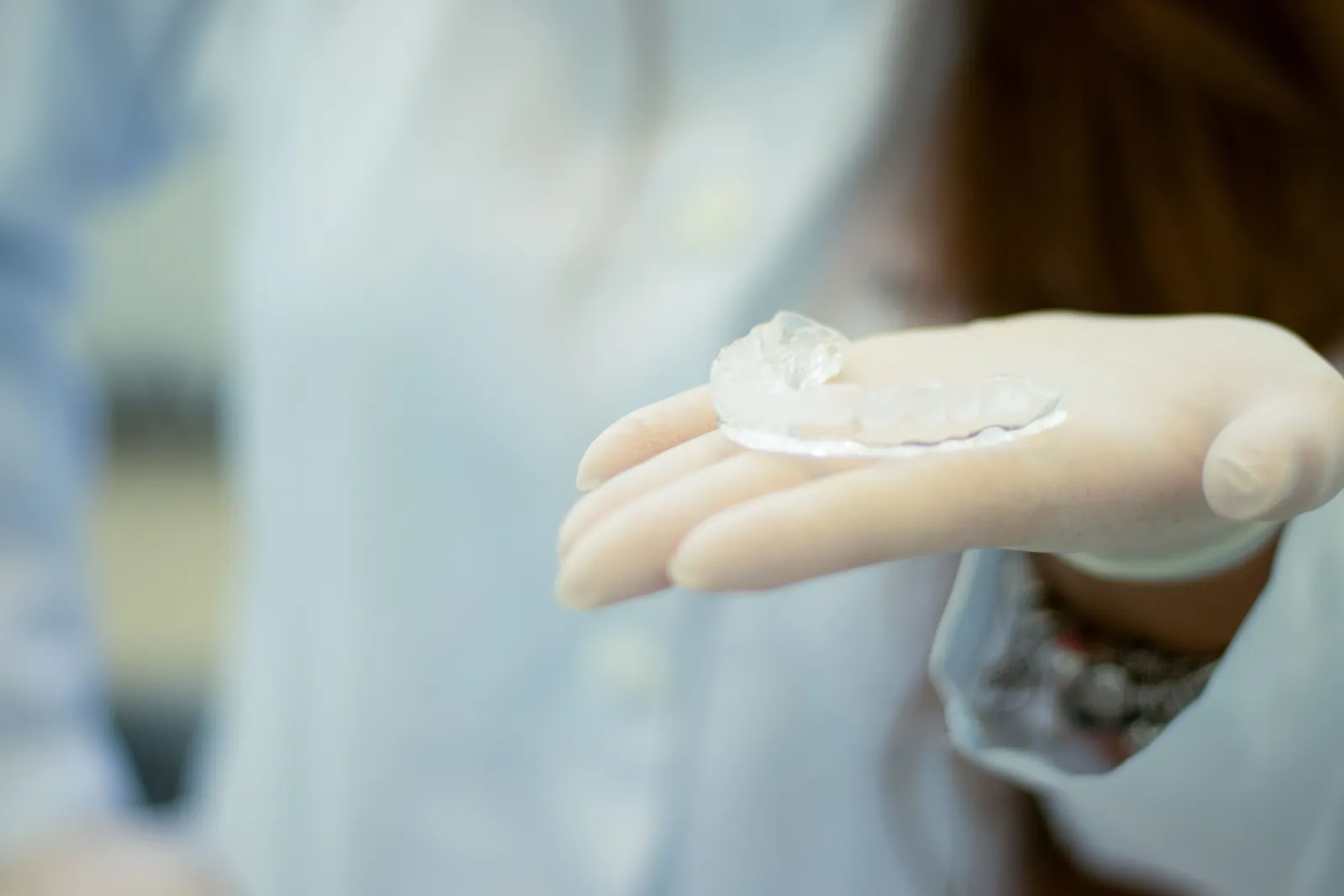
Custom Night Guard or Drugstore Guard: What the Difference Is Worth
A boil-and-bite guard is soft and only roughly shaped to your teeth, so it can shift and, in some people, make the jaw muscles work harder. A custom guard can be made hard and fitted to your bite, which spreads the force of grinding evenly and keeps the guard in place.
Read more
Why Dentures Get Loose Over Time, and What Actually Fixes It
Dentures get loose because the jawbone under them keeps shrinking once the tooth roots are gone, while the denture stays the same shape. A reline or a new denture refits it to the bone you have now; implants put load back into the bone and hold the denture in place.
Read more
Can Gum Disease Be Reversed? Where the Line Is
Gingivitis can be reversed, because nothing that holds the tooth has been lost yet. Periodontitis cannot, because lost bone does not grow back on its own, but it can be slowed and kept stable.
Read more