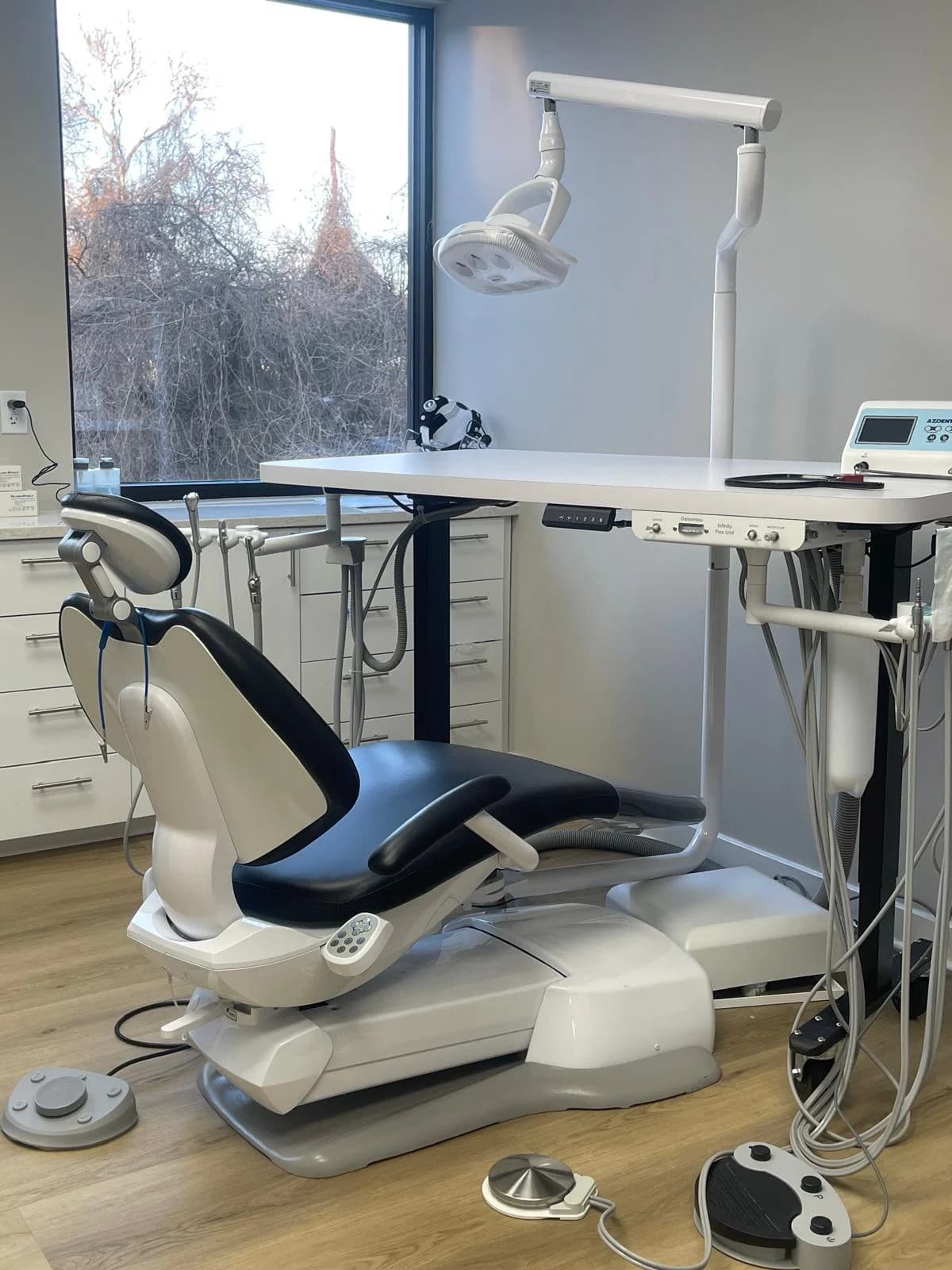
You wake up with a tight jaw, or someone tells you they hear you grinding at night. Maybe a dentist pointed out the flat edges on your back teeth. The pharmacy sells a night guard for less than a dentist charges, so the fair question is whether the difference is worth it. Choosing a custom night guard vs store bought comes down to how well the guard fits your bite and what it is made of. Those two things decide whether a guard protects your teeth, and in some people whether it makes the jaw work harder.
What does a night guard actually do?
Grinding at night happens in short bursts while you sleep, and it often happens without you knowing. In one study, researchers put bite sensors inside guards worn by 10 people who grind. The average burst lasted about seven seconds (Nishigawa et al., 2001). For at least one person, the hardest bite during sleep was stronger than the hardest bite they could make on purpose while awake.
Enamel grinding on enamel under that force wears both surfaces down, and enamel does not grow back. Once the wear reaches the softer dentin underneath, the tooth wears faster and can turn sensitive to cold. The same force can also crack a tooth or chip a crown or veneer.
A guard puts a layer of plastic between your upper and lower teeth. The plastic takes the wear instead of your enamel. A hard, even surface also spreads the force across all the teeth, instead of loading a few points.
What a guard has not been shown to do is stop the grinding. A 2007 Cochrane review found too little evidence that a guard reduces grinding itself, though it noted a possible benefit for tooth wear. So the useful question about any guard is whether it protects the teeth without adding strain to the jaw.
Custom night guard vs store bought: what is actually different?
Without a dentist, you can buy a stock guard or a boil-and-bite guard. A stock guard is one preformed shape that you put in as it is. A boil-and-bite guard is soft plastic that you heat in hot water and bite into, so it keeps a rough print of your teeth.
That print is shallow, and the plastic stays soft. Through the night the guard can loosen and move, so your teeth land on different spots of it. If you bite too far into it while it is warm, the plastic under your back teeth can end up thin. A 2014 survey of guards sold online in the UK found that none of the designs made sure every tooth was covered.
A custom guard starts from an exact copy of your teeth, taken with a scan or an impression. It can be made of hard plastic (acrylic) and shaped to cover every tooth in the arch. With a hard guard in place, the dentist adjusts the surface until the opposite teeth touch it evenly on both sides. That even contact is what spreads the force, and it gives the jaw the same stable surface to close onto every time. Ask what your guard will be made of before it is ordered.
Can a store-bought guard make jaw pain worse?
It can, and soft material is the first reason. In a small study, researchers recorded the jaw muscles of 10 people at night, first with a hard guard and then with a soft one. The hard guard reduced muscle activity in 8 of the 10. The soft guard reduced it in only 1 person and increased it in 5 (Okeson, 1987).
The study measured muscle activity, not pain, and it did not test why. One idea is that soft plastic gives under the teeth the way food does, which invites the jaw to keep working.
Fit is the second reason. A guard that shifts, or that is thicker on one side, can make the teeth meet on a few high spots instead of evenly. The jaw then closes onto a different surface from one night to the next, instead of the same stable one.
Coverage is the third. Teeth that a guard does not cover can drift with long-term nightly wear, which changes how your bite fits together. The same UK survey warned of this for any guard that covers only part of the teeth and is worn for long periods.
The National Institute of Dental and Craniofacial Research gives two plain rules for any splint or guard. Stop using it and see your dentist or doctor if it causes pain. And make sure it is not designed to change your bite for good.
When is a drugstore guard good enough?
Sometimes, for a while. If you grind but have no jaw pain, a store-bought guard still puts plastic between your teeth. That plastic wears instead of your enamel, which beats enamel grinding on enamel every night. It is also a reasonable stopgap while you wait for a custom guard.
Watch for three signs that it is not working. Your jaw feels more sore in the morning than it did before. Your teeth seem to meet differently when you take it out. The guard has worn through or split. Any one of these is a reason to stop wearing it and have your bite checked.
If jaw pain, clicking or headaches are the main problem, the question changes. A guard for the jaw joint is chosen and adjusted for the joint and the muscles, and that starts with an exam. Our post on jaw pain and when to see a dentist explains the signs to look for.
What does the extra cost of a custom guard pay for?
You are paying for the steps a store-bought guard skips. An exam checks whether the wear comes from grinding or from something else, such as acid wearing the enamel. A scan or impression records your exact teeth, and the guard is made to that copy. Then the dentist adjusts the fit in your mouth, and again later if your bite feels off.
If you already have crowns, veneers or implants, a guard that fits well protects that work along with your natural teeth.
At Front Royal Dental Group, a custom night guard starts with an exam. Some dental plans include a benefit for night guards and some do not. We check with your plan and give you a written estimate before anything is made. Call to verify your specific plan. Our night guard page explains how we make them.
What to do
If you grind and your jaw does not hurt, a store-bought guard is better than bare teeth while you decide. When jaw pain is part of the picture, our TMJ treatment page covers what we look at. Dr. Mohamed Elgazzar trained at the Dawson Academy in TMJ therapy. If your jaw is sore, your bite feels different, or you have dental work to protect, have your teeth and bite checked before you buy.
Ready to get started? Schedule a visit with Front Royal Dental Group, or call (540) 636-2003.
More from Our Blog

Why Dentures Get Loose Over Time, and What Actually Fixes It
Dentures get loose because the jawbone under them keeps shrinking once the tooth roots are gone, while the denture stays the same shape. A reline or a new denture refits it to the bone you have now; implants put load back into the bone and hold the denture in place.
Read more
Can Gum Disease Be Reversed? Where the Line Is
Gingivitis can be reversed, because nothing that holds the tooth has been lost yet. Periodontitis cannot, because lost bone does not grow back on its own, but it can be slowed and kept stable.
Read more
Is Sparkling Water Bad for Your Teeth?
Plain sparkling water is only mildly acidic, and lab tests find it close to still water for enamel. Flavored seltzers with added acid behave more like juice, and sipping them all day keeps that acid on your teeth.
Read more