You bit into something and felt one tooth give. Or you pressed it with your tongue and it moved, just slightly, in a way it never did before. A loose tooth as an adult is a symptom worth taking seriously, because the tooth itself is usually not the problem. What has changed is the support underneath it.
This post explains what holds an adult tooth in place, the five things that loosen it, and what to do today.
Why does an adult tooth feel loose?
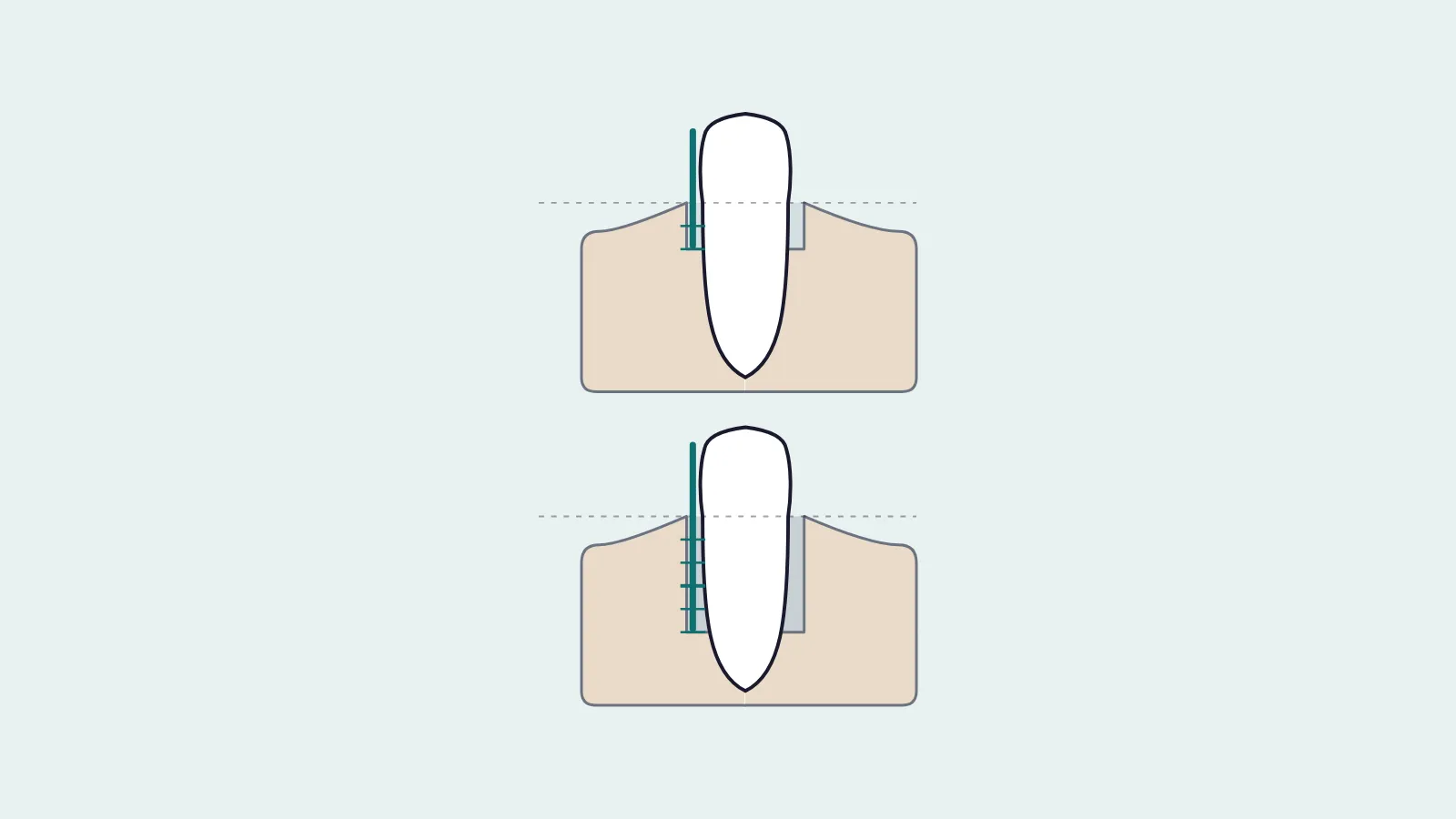
A tooth does not sit in the jaw like a post in concrete. It sits in a socket of bone, held by a ligament made of fibers that run from the root to the bone. That ligament gives the tooth a very small cushion, which is why a healthy tooth moves a hair and no more.
When you feel a tooth shift, the support has usually changed in one of three ways. Either the bone around the root is gone, the ligament fibers are torn, or something such as pus is pushing against the tooth. Each of those is a change in support, and each one has a different cause and calls for a different fix.
Can gum disease loosen an adult tooth?
Yes, and it is the first cause to rule out. The American Academy of Periodontology lists "loose or separating teeth" as a warning sign of gum disease. It explains that in periodontitis "the tissues and bone that support the teeth are broken down and destroyed" (AAP).
The loss is slow: bacteria in plaque and tartar sit in the gum pocket, and your body breaks down the nearby bone in response. The National Institute of Dental and Craniofacial Research says this bone loss "may cause looseness and shifting of teeth" (NIDCR).
The CDC notes that about 4 in 10 U.S. adults aged 30 or older had some level of periodontitis in 2009 to 2014. It also says periodontitis "cannot be reversed, but it can be slowed down and managed with professional treatment" (CDC). Our post on whether gum disease can be reversed explains where that line falls.
Can a blow loosen a tooth?
Yes. A hit to the mouth can tear ligament fibers and push a tooth sideways, into its socket or partly out of it. The American Association of Endodontists describes exactly that: during an injury "a tooth may be pushed sideways, out of or into its socket" (AAE).
The blow can also injure the nerve and blood vessels inside the tooth, even when the crown looks fine. The AAE says root canal treatment is usually needed for adult teeth that have been dislodged, and should be started several days after the injury. It also advises return checkups for up to five years, because the body can start to reabsorb the root.
A tooth loosened by a blow is time-sensitive, so call as soon as you can, even if the tooth feels almost normal.
Does grinding your teeth make them loose?
Sometimes, but the evidence is narrower than many websites suggest. A 2018 review found that excessive biting forces "do not initiate periodontitis or loss of connective tissue attachment" (Fan and Caton, 2018). Grinding does not start gum disease, but it does add load.
When gum disease has already thinned the support, the same biting force moves the tooth further. The review found weak evidence that this may also speed up attachment loss. It also concluded that reducing tooth mobility may enhance the effect of gum treatment.
So clenching and grinding is rarely the whole story, but it is a reason a tooth with weakened support feels looser than it otherwise would. Our night guard page explains the guard we provide for people who grind.
Can an infection or a crack loosen a tooth?
Yes, and both can look like gum disease from the outside, which is why the cause needs confirming.
An infection at the root or in a gum pocket loosens a tooth as pus collects against it. A periodontal abscess is a sudden pocket of pus in the wall of a gum pocket, with "rapid tissue destruction" (Papapanou et al., 2018). Our post on abscessed teeth covers infection at the root, including why the pain can suddenly stop.
A crack below the gumline loosens a tooth by splitting it. The AAE says vertical root fractures "often show minimal signs and symptoms" and can go unnoticed for some time. It adds that a crack extending below the gum line cannot be saved and the tooth will need to be extracted (AAE). Our post on cracked teeth covers why these cracks hide from X-rays.
What should you do today about a loose tooth?
Do four small things while you arrange a visit.
-
Leave it alone. Do not push or wiggle the tooth to test it. Each push puts load on support that has already changed.
-
Eat soft food. Soup, eggs and yogurt keep biting force off the tooth, and chewing on the other side keeps it out of the way.
-
Keep it clean, gently. Plaque is what drives gum disease, so a soft brush along the gumline still matters, used with light pressure.
-
Call. The cause decides the treatment, and you cannot tell the cause by looking in a mirror.
If your tooth was knocked or hit, treat it as a dental emergency. The ADA's advice for a dental emergency is to "visit your dentist or an emergency room as soon as possible" (ADA MouthHealthy).
When does a loose tooth mean the emergency room first?
Go to the emergency room, or call 911, if the loose tooth comes with any of these signs. The UK's NHS lists them for a dental abscess that needs immediate action.
-
It is hard to breathe, speak or swallow
-
Your eye is swollen or painful, or your eyesight suddenly changes
-
You have a lot of swelling in your mouth
-
It is hard to open your mouth
The Mayo Clinic adds one more: a fever with swelling in your face when you cannot reach a dentist. After the hospital has dealt with the swelling, call us for the follow-up.
What happens when you call us?
We handle dental emergencies during business hours, Monday to Friday, 9:00 AM to 5:00 PM. Call (540) 636-2003 and tell us which tooth is loose, what happened just before it loosened, and whether you see any swelling. We will tell you what to do meanwhile and see you as soon as the schedule allows. Our emergency page has more on how we handle these calls.
At the visit, the exam looks for the cause. If gum disease is behind it, our periodontal care includes measuring the pockets around the tooth. Our periodontics page covers the care we provide.
An infected nerve is treated with root canal therapy. When too little is left to hold the tooth, extraction removes the source. Extractions are done under local anesthetic, and you can ask us to pause at any time. We do not offer sedation of any kind.
We cannot promise that every loose tooth stays. Whether a loose tooth can stay depends on the cause and on how much support is left. The exam tells us where yours stands, and you decide what happens next with that information in hand. You get a written estimate before treatment starts.
What to do
Call (540) 636-2003 or use the contact form, and tell us which tooth is loose and what happened to it. If you have trouble breathing or swallowing, or facial swelling with a fever, go to the emergency room first.
Ready to get started? Schedule a visit with Front Royal Dental Group, or call (540) 636-2003.
More from Our Blog
Pregnancy Gingivitis: Why Gums Bleed and Swell While You Are Expecting
Pregnancy hormones make your gums react harder to the same plaque, so they swell and bleed more. It is common, it is not a sign you brush badly, and dental care is safe while you are pregnant.
Read more
Do Dental Implants Hurt? What You Feel, Step by Step
The area is numbed with local anesthetic first, so what you may feel during surgery is pressure rather than pain. The soreness comes afterward, and the studies describe how it fades.
Read more
Does Whitening Toothpaste Actually Whiten Your Teeth?
Whitening toothpaste can lift stain from the surface of your teeth. It does not change the color inside them, and a harsher paste does not make that any better.
Read more