You have probably stood in the toothpaste aisle and wondered what the box that says "whitening" can do that the plain tube cannot. Or you have used one for months and the mirror still looks about the same. So does whitening toothpaste actually whiten your teeth?
It does one of two jobs that share the word. It can lift stain off the outside of your teeth, but it does not change the color inside them. That second job is the one most people have in mind when they buy it.
Does whitening toothpaste actually whiten your teeth?
Two different problems make teeth look dark, and they sit in different places.
The first is stain on the surface. Coffee, tea, red wine and fruit leave small colored molecules, such as tannins, that stick to the thin protein film on your enamel. A 2019 review in Dentistry Journal notes that this stain builds up most where the film is thick and hard to clean.
The second is the color of the tooth itself. Enamel is partly see-through, and the dentin underneath is a darker, yellower layer that shows through it. That color sits inside the tooth, so a brush and a paste cannot reach it.
A toothpaste works on the first problem only. The American Dental Association (ADA) says these toothpastes "primarily rely on abrasives" to remove surface stain. It adds that products like them "will not have a significant impact on intrinsic stains or the intrinsic color of the tooth."
That does not make them useless. A 2025 systematic review in BMC Oral Health pooled 14 randomized trials. Whitening toothpastes cut the area and intensity of surface stain more than regular toothpaste did. The ADA page also cites a 2020 review that found limited evidence, and less effect than whitening strips.
If coffee has dulled your teeth, a whitening toothpaste can brighten them. If your teeth are naturally yellow, it is unlikely to change that much.
What does a whitening toothpaste do that regular toothpaste does not?
Every toothpaste carries an abrasive, which is a fine mineral grit that scrubs the tooth surface. The Dentistry Journal review calls abrasives the most important ingredients for stain removal, and a whitening formula leans on that grit more. Some also add a low level of peroxide. The ADA says it is there "to help lighten tooth color."
Peroxide is the ingredient that changes color inside a tooth, but it needs time to work. Whitening strips and trays hold the gel against your teeth for a long stretch, which gives it a longer contact time. A toothpaste stays on your teeth for as long as you brush, then you spit and rinse. So the amount is small and the time is short.
The most useful thing on the box is the ADA Seal. The ADA says products carrying it, including whitening toothpastes, meet its requirements for safety and effectiveness when used as directed. A product without the Seal has not earned that statement.
Why is a more abrasive toothpaste not a whiter one?
Abrasion removes stain only because stain sits on top of the tooth. Once the surface is clean, there is nothing more to take. A harsher paste cannot reach the color inside the tooth, because that color is not on the surface to be scrubbed away.
What a harsher paste can do is wear the surface. The Dentistry Journal review says plainly that a toothpaste with high abrasivity will remove the outer part of the enamel. Enamel does not grow back, and as it thins, the yellower dentin shows through more, so over-scrubbing can leave teeth looking darker than before.
Toothpaste abrasivity is measured on a scale called Relative Dentin Abrasivity, or RDA. The ADA requires that every toothpaste with its Seal score 250 or less. The international standard uses the same ceiling, which dentalcare.com describes as safe for hard tissues across a lifetime of use.
There is an honest tradeoff, and the same source notes that a toothpaste with a lower RDA tends to remove less surface stain. So within the safe range, a stronger paste cleans a little more stain, and that is the whole gain. The authors of the BMC review add that their trials did not measure wear, and that too much abrasion can damage enamel and dentin.
Can whitening toothpaste make your teeth sensitive?
Yes, and the ADA page describes a systematic review that found whitening toothpastes carry comparable adverse effects, such as sensitivity and oral irritation.
It usually feels like a short, sharp zing when cold air or a cold drink touches a tooth, and it fades within seconds. Sore or irritated gums are the other sign.
The reason is the structure of the tooth. Dentin is full of tiny channels that lead to the nerve, and enamel normally covers them. Where enamel wears thin or a gum has pulled back, those channels are open, and cold travels down them. Our post on why teeth get sensitive to cold covers this in more detail. Peroxide can also reach the dentin, as we explain in our post on whether whitening damages enamel.
If a toothpaste makes your teeth zing, stop using it. If one tooth keeps reacting, or the zing lingers, tell us at your next visit. A cavity or a crack can feel the same way, and a different toothpaste will not fix either one.
What can no toothpaste do?
It cannot change a crown, a veneer or bonding. Those are made of ceramic or resin. The ADA notes that only natural teeth are affected by a whitening agent, so restorations keep the shade they were made in. If you have one on a front tooth, a whitening toothpaste can polish stain off its surface, but it will not alter the color.
It cannot lift stain that formed inside the tooth. Some darkening starts while the teeth are forming, from certain medication or too much fluoride. Other darkening follows an injured tooth or a root canal. Those stains respond differently, and some call for a different treatment from whitening. White patches are a separate matter, and we cover them in our post on white spots on teeth.
It also cannot remove tartar, the hardened buildup along the gumline that looks yellow or brown. Brushing does not break it loose, so that job belongs to a professional cleaning.
What should you do if toothpaste is not enough?
Start with an exam, so you know what kind of discoloration you have. An exam with our exam and hygiene team is how you find out whether the cause is surface stain, tartar, or something deeper. Cavities, cracks and receding gums are worth ruling out before any gel goes near your teeth. It also matters which of your teeth are natural and which are restorations, because only natural teeth change shade.
If you want to go further than a toothpaste can, we offer the GLO in-office system. It takes one visit of about 30 minutes and is built around keeping sensitivity down. We also offer custom trays for whitening at home. Our whitening page has the details and the current price. For a side-by-side look at in-office, take-home and store-bought options, read our guide to teeth whitening options.
Ready to get started? Schedule a visit with Front Royal Dental Group, or call (540) 636-2003.
More from Our Blog
Jaw Clicking or Popping: When It Is Harmless and When It Is Not
Jaw clicking is usually a small cartilage disc moving over the jawbone. With no pain and no locking, it needs no treatment. Pain, locking or a mouth that opens less is the point to get it checked.
Read more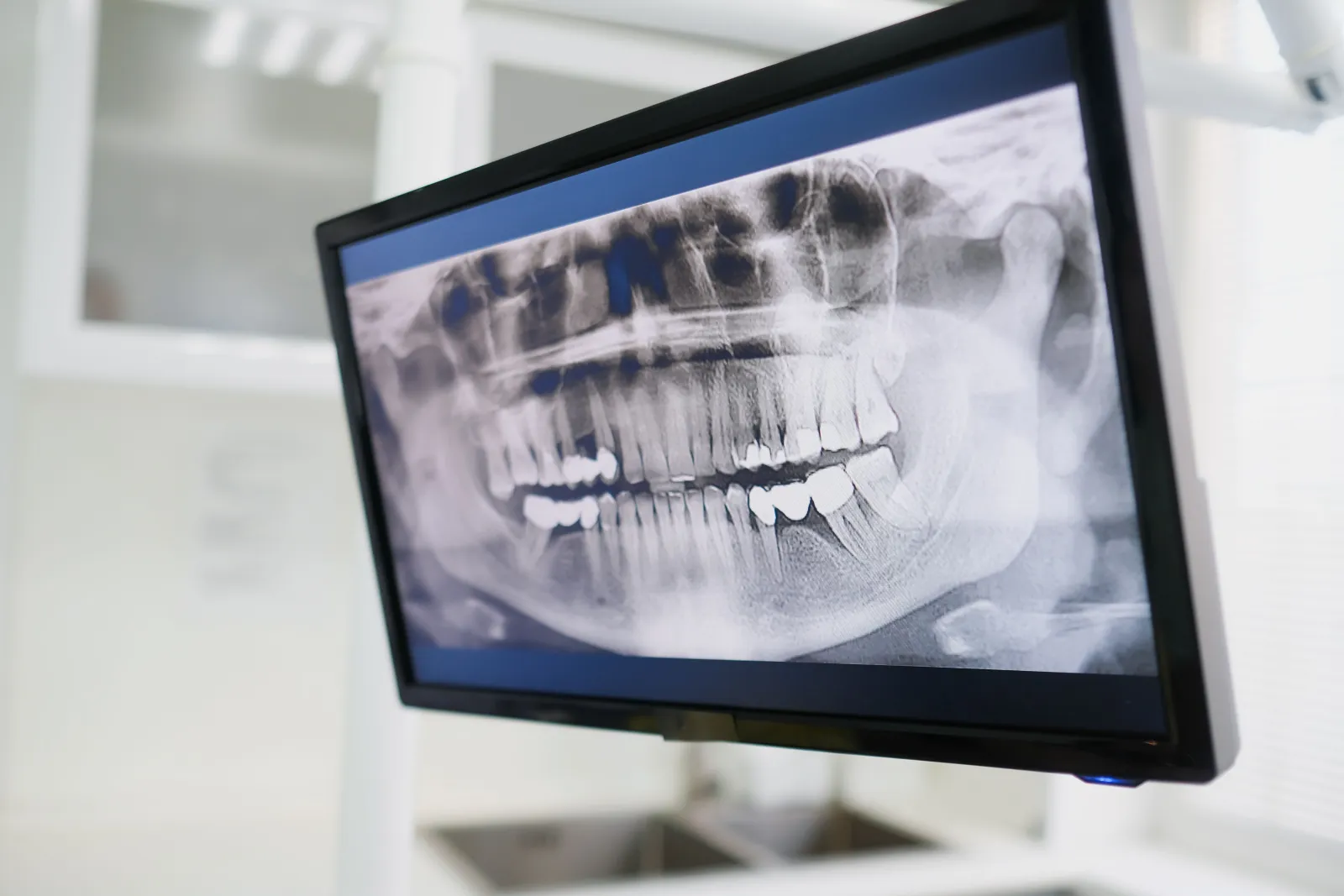
Dental X-Rays: How Much Radiation, and How Often Do You Need Them?
Four bitewings measured 5 microsieverts in one lab study, about half a day of natural background radiation. How often you need them depends on your cavity risk, from every 6 to 18 months down to every 24 to 36.
Read more
Full Mouth Dental Implants: What 'Full Mouth' Actually Means
Full mouth dental implants rarely means one implant for every tooth. The phrase covers four different designs, and what holds the teeth in each one decides how many implants you need.
Read more