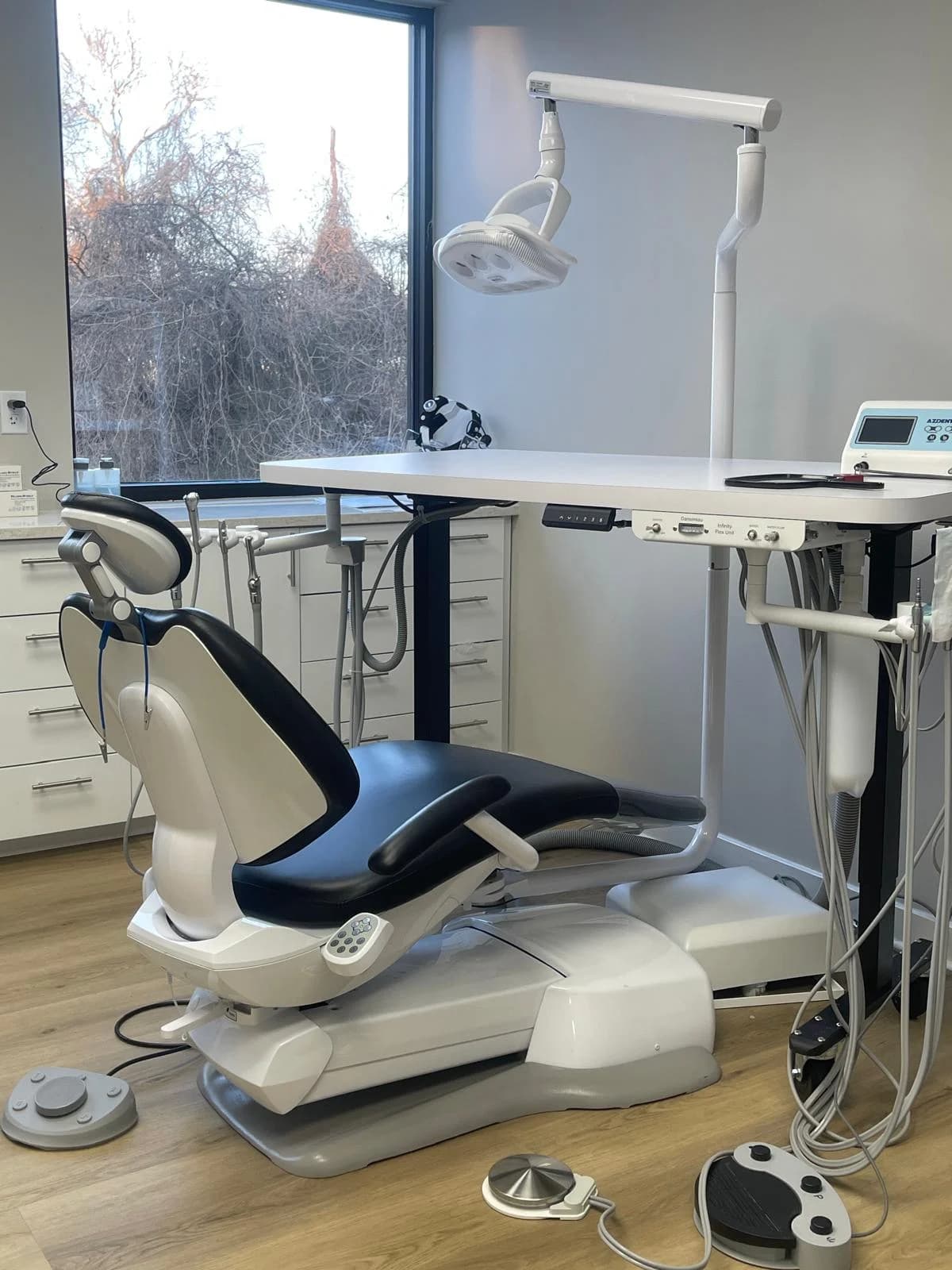
It Has Been Years Since Your Last Dental Visit. Here Is What Happens Now
You know roughly how long it has been. Most people do, to within a year or so, even when they say they have lost track.
And you have probably noticed the thing that keeps the gap open. The longer it gets, the more you expect to be told off when you finally go, so you put it off again, which makes the number worse. I have watched that loop keep people away for a decade.
I want to take the lecture off the table, and then tell you what genuinely changes in a mouth over that time. The second part is more useful than the reassurance.
What actually happens over years without a cleaning
Two processes run in the background. They are unrelated to each other, and only one of them announces itself.
Decay moves in one direction. Bacteria produce acid, acid dissolves minerals out of enamel, and saliva slowly puts them back. That balance tips one way or the other depending on how often sugar arrives. Where it tips the wrong way, decay works through the enamel, into the softer dentine underneath, and eventually into the pulp, which is the living tissue carrying the nerve and blood supply. The tooth only starts hurting at that last stage. Everything before it is silent.
Calculus builds below the gumline. Plaque that stays on a tooth hardens into calculus, and calculus is porous and rough, so bacteria colonise it easily. It cannot be brushed off. Where it forms at the gumline, the inflammation it drives makes the gum detach slightly from the tooth. That deepens the groove, which makes it harder to clean, which lets more calculus form. The loop sustains itself.
Then the part that matters most. The body responds to that ongoing infection by resorbing the bone around the tooth, pulling it back away from the source. Bone lost that way does not come back. Teeth are held in place by bone, so as it recedes, teeth loosen. This is how adults lose teeth that never had a single cavity, and it happens without pain at any stage.
Why the news is usually better than people expect
Here is what I have found after doing this a long time.
The people who are most frightened of the appointment are usually not the ones with the worst mouths. They are the ones who have been imagining it for the longest.
What is actually in front of us on the day is a list. Some of it needs attention soon, some of it needs watching, and some of it is fine. It is almost never everything at once, and it is almost never as expensive as the version in your head, because the version in your head has had years to grow.
The one thing I will not do is pretend nothing changed. Something usually did. But finding out what is smaller than not knowing.
What the first visit back actually involves
An exam and x-rays, and a conversation. That is it. We do not do a lot of treatment on day one. There is rarely a reason to.
The x-rays matter more than people expect, because a large share of decay starts on the surfaces between teeth where nobody can see it, including us. Without an image we are guessing at the part that matters most.
We will also measure your gums. You will hear numbers called out, one to three millimetres in a healthy mouth. Anything four or above means a pocket has formed. Those numbers tell us which cleaning you actually need, and they are yours to ask about.
Then you get a written plan with fees, sorted by what needs attention now and what can reasonably wait. You decide what happens next, and you decide it with the numbers in front of you rather than under pressure in the chair.
If it has been long enough that you expect a deep cleaning rather than a regular one, that is a fair guess. The measurement decides it, not the length of the gap. More on how we handle periodontal care.
If the reason you stopped was fear
Say so when you book. It is the single most useful thing you can tell us, and we hear it constantly.
It changes practical things. How much we explain before we do it, how often we stop, whether we book you longer so nothing feels rushed. You can raise a hand at any point and we stop. Knowing that is available tends to matter more than using it.
One honest note: we do not offer sedation of any kind. If your anxiety is at the level where you need to be sedated for treatment, we are not the right practice for that part, and I would rather tell you now than have you find out on the day.
If the reason you stopped was money
Also worth saying out loud when you call.
It changes how we sequence things. There is a real difference between a tooth that is actively infected and one we are keeping an eye on, and a plan built with your budget in view looks different from one built without it. We accept Virginia Medicaid through DentaQuest and a long list of PPO plans, and both are on our insurance and financing page.
What to do
Call and say how long it has been. (540) 636-2003. Nobody on the other end of that phone is going to react, because it is a sentence we hear every week.
The appointment tells you what is true. Whatever that turns out to be, it is easier to deal with than the number you have been carrying around.
Ready to get started? Schedule a visit with Front Royal Dental Group, or call (540) 636-2003.
More from Our Blog

Why Dentures Get Loose Over Time, and What Actually Fixes It
Dentures get loose because the jawbone under them keeps shrinking once the tooth roots are gone, while the denture stays the same shape. A reline or a new denture refits it to the bone you have now; implants put load back into the bone and hold the denture in place.
Read more
Can Gum Disease Be Reversed? Where the Line Is
Gingivitis can be reversed, because nothing that holds the tooth has been lost yet. Periodontitis cannot, because lost bone does not grow back on its own, but it can be slowed and kept stable.
Read more
Is Sparkling Water Bad for Your Teeth?
Plain sparkling water is only mildly acidic, and lab tests find it close to still water for enamel. Flavored seltzers with added acid behave more like juice, and sipping them all day keeps that acid on your teeth.
Read more