Tooth Extraction in Front Royal, VA: When It's Needed and What to Expect
If you've been told you might need a tooth extraction in Front Royal, VA, you're probably feeling a little uneasy about it. That's completely normal. Most people don't love the idea of having a tooth removed, and the unknown part is usually the hardest. So let me walk you through what's actually involved, when an extraction makes sense, and how we keep you comfortable through it.
Why a Tooth Might Need to Come Out
We always try to save a natural tooth first. That's the goal. Sometimes a root canal or a crown can rescue a tooth that seems beyond hope, and we'll explore those options before we ever talk about removing it.
But there are times when an extraction really is the better path. A tooth that's badly broken below the gumline, severely decayed, or cracked in a way we can't repair may not be worth saving. Advanced gum disease can loosen a tooth to the point where it's causing more harm staying in. And sometimes a tooth is crowding the others or stuck below the surface, like a wisdom tooth, and it keeps causing problems.
When we reach that point, I'll explain exactly what I'm seeing and why. You get to decide what happens next. It's your tooth and your choice, and my job is to make sure you understand your options clearly.
What Happens During an Extraction
Here's the part that worries most people, so I want to keep it simple. Before anything, we make sure the area is fully numb. You should feel pressure during the procedure, but not sharp pain. If you feel anything more than pressure, you tell me and we pause. You're in control the whole time.
For a straightforward extraction, the tooth is loosened gently and lifted out. It often takes less time than people expect. For a tooth that's broken or hasn't fully come in, the process can take a bit longer, and we may need a few extra steps. Either way, I'll tell you what I'm doing as we go, so nothing catches you off guard.
Many patients are surprised afterward at how manageable the whole thing felt. The fear of it is usually bigger than the reality.
Healing After Your Extraction
The first day or two is when you'll want to take it easy. A blood clot forms in the spot where the tooth was, and protecting that clot helps everything heal well. We'll give you clear, written instructions before you leave, and I'll go over them with you so you know what to expect.
A few things that typically help:
- Rest for the first day and avoid hard chewing on that side
- Stick to soft foods and skip straws for a few days
- Keep the area clean, gently, the way we show you
- Take any recommended medication as directed
Some swelling or tenderness in the first few days is normal. If something feels off, or the discomfort is getting worse instead of better, call us. We'd always rather hear from you than have you wonder.
Replacing a Missing Tooth
Once a tooth is out, you may be thinking about what comes next, especially if it's a tooth that shows when you smile or one you chew with. You don't have to decide right away. But it helps to know your options.
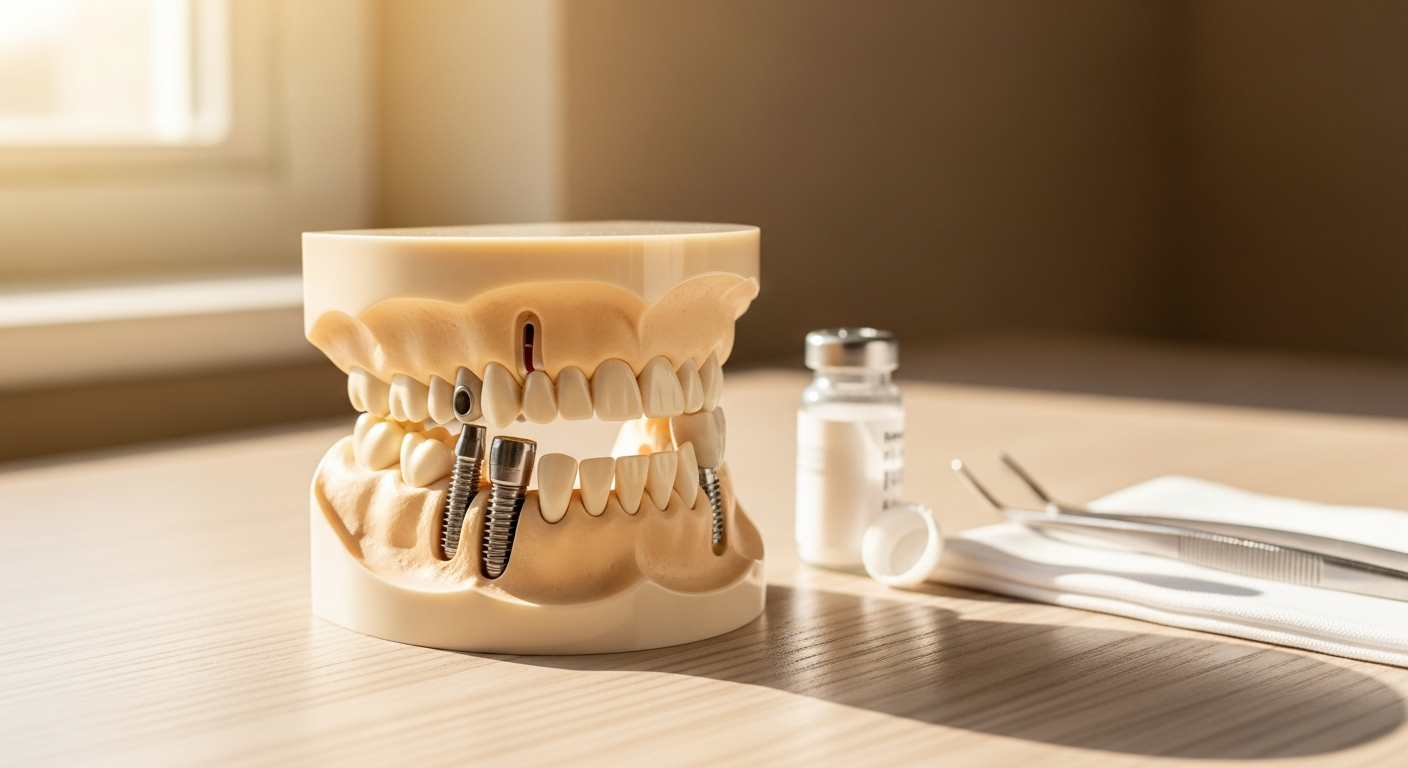
For many patients, dental implants are a durable, natural-looking way to replace a missing tooth. If you've lost several teeth, full-arch options may be worth discussing too. Dr. Elgazzar, who trained at the Dawson Academy, works closely with patients on implant planning and jaw-related concerns, so you're in experienced hands if that's the direction you choose.
There's no rush on this part. When you're ready to talk through replacement, we'll go at your pace.
When an Extraction Becomes Urgent
Most extractions are planned. But sometimes a tooth causes sudden, severe pain, swelling, or a serious infection, and that needs attention sooner. If you're dealing with a dental emergency, don't tough it out at home hoping it passes.
We make room for emergency dental visits because pain like that shouldn't wait. Even if you're not sure how serious it is, calling us is the right move. We'll help you figure out the next step.
Frequently Asked Questions
Does a tooth extraction hurt?
You shouldn't feel sharp pain during the procedure because we numb the area fully first. You'll feel some pressure, which is normal. Afterward, mild soreness for a few days is common, and most patients manage it well with the instructions we give you. If your pain grows instead of fading, let us know.
How long does it take to heal after a tooth is pulled?
The gum tissue usually feels much better within the first week or so, though full healing of the bone underneath continues for some time after that. Healing speed varies from person to person based on your health and the tooth involved. We'll check on your progress and answer any questions along the way.
Can I leave the gap instead of replacing the tooth?
You can, and for some teeth, especially in the back where it's not always essential, that may be reasonable. But missing teeth can let nearby teeth shift over time and may affect how you chew. We're happy to talk through whether replacement makes sense for your situation, with no pressure either way.
What should I eat after an extraction?
Soft foods are your friend for the first few days. Think yogurt, eggs, soup that isn't too hot, mashed potatoes, and smoothies eaten with a spoon rather than a straw. As the area heals, you can ease back into your normal diet. Avoid anything crunchy, sharp, or very hot right after the procedure.
A tooth extraction sounds scarier than it usually is, and you don't have to carry the worry alone. If you want to understand your options, we'll walk through it together and figure out what's right for you. Whenever you're ready, reach out — even a quick question is welcome.
More from Our Blog

Is Fluoride Bad for You? What the Dose Actually Decides
Fluoride's harms show up at doses well above the 0.7 mg/L recommended for US tap water. Here are the numbers, what each one protects against, and what is still unsettled.
Read more
How Much Does All-on-4 Cost? What 'Per Arch' Means on Your Quote
An All-on-4 quote prices one jaw as one custom-built unit. What it costs depends on the lines inside: the implants, the 3D scan and surgical guide, extractions and grafting, the provisional teeth, and the bridge material.
Read more
Choosing a Dentist When You Live in Shenandoah
When your dentist is a drive away, the practical question is not distance. It is how many trips your care will take. Here is how to plan treatment so the drive is worth it.
Read more