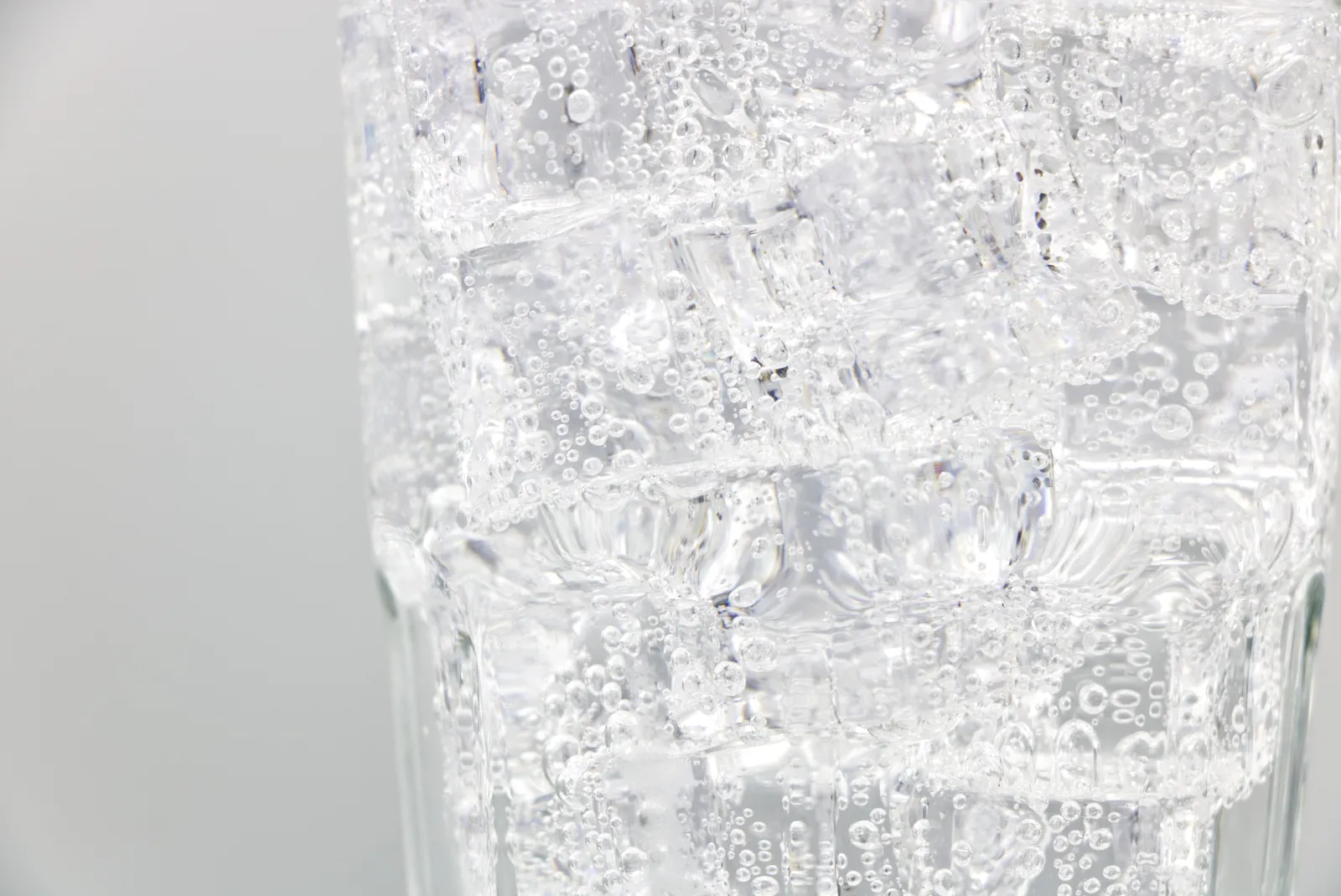
Maybe you swapped soda for sparkling water to cut out sugar, and then heard that the bubbles wear away enamel just as soda does. So is sparkling water bad for your teeth?
For plain, unflavored sparkling water, the laboratory evidence says the risk is low. The bubbles do make water slightly acidic. With sparkling water, though, most of the risk comes from acid added for flavor, and from how long you keep sipping.
Is sparkling water bad for your teeth the way soda is?
Plain sparkling water is not. Soda can harm teeth in two separate ways, and plain sparkling water does very little of either.
The first is a cavity. The bacteria on your teeth feed on sugar and release acid, and over time that acid wears a hole into the tooth. Plain sparkling water has no sugar, so it gives those bacteria nothing to eat.
The second is erosion, where the acid already in the drink dissolves enamel directly, with no bacteria involved. A 2016 study in the Journal of the American Dental Association measured 380 drinks from stores in Alabama. It rated anything below pH 4.0 as erosive, and 93% of the drinks fell below that line (Reddy et al., 2016). Plain sparkling waters were among the few that did not.
Where does the acid in sparkling water come from?
Sparkling water is water with carbon dioxide gas forced into it under pressure. A small part of that gas reacts with the water to form carbonic acid. Carbonic acid is weak, and it does not stay in the glass. As the bubbles escape, the acid goes with them, which is why sparkling water that has gone flat tastes less sharp.
A 2001 laboratory study put this to the test with extracted human teeth and powdered enamel mineral (Parry et al., 2001). Sparkling mineral waters dissolved slightly more mineral than still waters. They still dissolved about one hundred times less than the soft drinks tested beside them. When the researchers took the gas out of one sparkling water, it dissolved even less. The authors concluded that carbonation by itself may not be an important cause of erosion.
Those were tests on extracted teeth and tooth mineral, not on teeth in a living mouth. They show how drinks compare with each other, not what happens to one person's teeth over years.
What does the pH of sparkling water mean for your enamel?
pH measures how acidic a liquid is. Seven is neutral, and each step down the scale is ten times more acidic than the step above it.
Enamel is mostly a crystal of calcium and phosphate, and your saliva normally holds enough of both to keep that crystal intact. The JADA paper notes that enamel starts to lose mineral once the pH around it drops below about 5.5. Dentists call that point the critical pH.
In that study, two sparkling mineral waters and a club soda measured between pH 4.96 and 5.25, while the local tap water measured 7.20. Plain sparkling water sits just under the critical pH, and about one full step above the erosion line. A still bottled water in the same study, Dasani, measured 5.03, inside the same range as the sparkling waters.
The critical pH also moves. A 2003 review by Colin Dawes explains that it depends on how much calcium and phosphate the liquid already holds (Dawes, 2003). A drink that carries its own calcium has to be more acidic before it starts pulling calcium out of your teeth. When the 2001 researchers added minerals to pure water, calcium cut the amount of tooth mineral dissolved more than any other they tested. That helps explain why mineral waters behave so mildly in the lab.
Are flavored and citrus seltzers worse for your teeth?
Yes, and by a wide margin. Many flavored drinks get their sharp taste from added acid, often citric acid, the acid in lemons. Unlike carbonic acid, citric acid does not leave as a gas, so it stays in the drink until your saliva neutralizes it.
A 2007 study tested flavored sparkling waters sold in the UK, and their pH ran from 2.74 to 3.34 (Brown et al., 2007). In the lab, every one dissolved about as much enamel mineral as pure orange juice or more, between 89% and 143% of the juice's effect. The authors advised treating flavored sparkling waters as potentially erosive drinks rather than as water with flavoring.
The US measurements point the same way. In the JADA study, plain Dasani measured 5.03, while its lemon, grape and strawberry flavors measured 3.03 to 3.05. Adding flavor took the same brand two steps down the scale, which means about one hundred times more acidic. Every flavored bottled water from Dasani, Clear American and Skinny Water in that study fell between 3.03 and 3.81, below the erosion line.
A sweetened sparkling drink adds a second problem. Its sugar feeds cavity bacteria, so it works like a soft drink on both counts.
Why does sipping all day matter?
Each sip brings acid back to the tooth surface, and saliva needs an unbroken stretch of time to clear it. Our post on how cavities form shows why one drink sipped all morning does more harm than the same drink finished with a meal. Erosion follows the same timing. The JADA authors note that saliva dilutes and buffers drink acids. When people drink acidic drinks to excess, though, saliva may give the teeth only limited protection.
The reason to care is that erosion does not reverse. Dawes notes that an early decay spot can take minerals back, but enamel already dissolved away by acid cannot be rebuilt. As enamel thins, teeth can turn sensitive to cold, and the yellower layer underneath, called dentin, can start to show through. Enamel has no nerves, so early erosion gives no warning, and it is easy to miss until it has gone a long way.
What should you do if you drink sparkling water every day?
You do not need to give it up. These habits limit how much acid reaches your teeth, and for how long.
- Choose plain, unflavored sparkling water most of the time, and still tap water when you can.
- Treat any can that lists citric acid or fruit juice as an acidic drink, and any that lists sugar as a soft drink.
- Drink flavored seltzer with a meal or in one sitting, rather than keeping it on your desk all day.
- Follow an acidic drink with a few sips of plain water.
An exam is where a dentist finds early wear and the cavities you cannot feel. Tell the dentist what you drink and how often at a new patient exam and cleaning. If erosion has already exposed dentin, a tooth-colored filling can cover the worn area.
Ready to get started? Schedule a visit with Front Royal Dental Group, or call (540) 636-2003.
More from Our Blog
Do You Really Need a Dental Cleaning Every Six Months?
Six months is a tradition, not a tested rule. A large UK trial found that adults a dentist had judged low risk did about as well with checkups two years apart, while gum disease, dry mouth, smoking and diabetes call for shorter gaps.
Read more
Does Teeth Whitening Damage Your Enamel?
Whitening used as directed does not strip enamel away. The peroxide passes through it and changes the color underneath. Acids, abrasives and overuse are what wear enamel down.
Read more
Root Canal or Pull the Tooth? What Each Choice Costs You Later
Removing a back tooth ends the infection, but the gap keeps changing your mouth: the bone shrinks and the teeth around it move. A root canal keeps the tooth in place, and a back tooth then needs a crown to stop it splitting.
Read more