You have a quote for All-on-4, and it says "per arch" next to one large number. Then you search for all on 4 dental implants cost in Virginia and find ranges that do not match it. The trouble is that you are comparing one total against other totals, and none of them show what is inside.
This post takes a full-arch quote apart, one line at a time. For each line we explain why it exists and what goes wrong without it. That way you can put two quotes side by side and see where they really differ.
What does "per arch" mean on an All-on-4 quote?
An arch is one jaw's full row of teeth, so your upper teeth are one arch and your lower teeth are the other. A quote "per arch" prices one jaw, and a plan for both jaws is two arches.
Each jaw gets its own plan because the two jaws differ in ways that matter for implants. The upper jaw has the sinus above the back teeth, and its bone is often softer. The lower jaw has a nerve running through it.
Why is it priced as one unit and not as four implants?
All-on-4 is not four separate teeth. It is one fixed bridge that carries a whole row of teeth, held by four or more implants. The original 2003 study of the technique placed four implants in the front of the lower jaw and joined them with one fixed acrylic bridge.
The back two implants usually go in at a tilt. Their tops lean backward, so the bridge can carry back teeth without an implant going into the sinus or near the nerve. That only works because the bridge is one rigid piece that locks the four implants together, so they share every bite between them.
So the bridge is made for one mouth, to the exact position and angle of each implant. That is why a quote treats the arch as one engineered unit. The number does not come from multiplying a single implant's price by four. Our earlier post on single implant cost covers how that simpler case is priced.
What lines should a full-arch quote list?
A complete quote should name each of the lines below. If one is missing, ask whether it is included, priced elsewhere, or not planned at all.
The implants: how many
Four is the fewest the design uses. Some plans use five or six, often in an upper jaw with softer bone, so the load spreads across more anchors. Each extra implant adds a part, a surgical step and a connector to the bridge. So two quotes for "All-on-4" can be for different numbers of implants.
The 3D scan and the printed surgical guide
A CBCT scan is a 3D X-ray that shows how tall and wide the bone is, and where the nerve and sinus sit. The American Academy of Oral and Maxillofacial Radiology recommends cross-sectional imaging for every implant site, and names CBCT as the method of choice.
The implants are then planned on that scan, and the plan is printed as a surgical guide. The guide fits over the jaw and holds the drill at the planned spot and angle. A 2018 review of 20 clinical studies found guided implants landed on average 1.2 mm from the planned entry point. Accuracy was a little lower in jaws with no teeth left. For tilted implants beside a sinus or nerve, that carry-over from screen to bone is the point of the guide.
We make our guides on our own 3D printer, and our guided implant surgery page shows how the planning works.
Extractions and bone grafting
Many people who need a full arch still have some failing teeth, and those teeth have to come out first. Where infection or a past extraction has left a hollow in the bone, a graft may be needed to fill it.
Some quotes include both, some list them separately, and some leave them out. If a quote leaves them out and you turn out to need them, they arrive later as a second bill.
The provisional teeth you wear while you heal
The implants usually need several months to bond with the bone before they can carry the final bridge. The gums and bone also reshape after extractions. So you wear a provisional set of teeth in the meantime, usually lighter and made of acrylic.
Ask what the provisional is and when it goes in. Some plans attach it to the implants at the surgery visit. Whether that is possible is a clinical call made on the day. It depends on how firmly each implant holds in the bone, so no plan can promise it in advance.
The final bridge material
This line can change a quote a great deal. The two common choices are acrylic teeth on a titanium frame, or a bridge made of zirconia, a hard tooth-colored ceramic.
Acrylic is softer, so it is kinder to the teeth it bites against. The tradeoff is that it wears, and single teeth can chip or come loose from the frame.
A 2023 review in Dentistry Journal found back-tooth wear was the most common problem with metal-acrylic bridges in one study it covered. The same study found solid zirconia's most common problem was wear on whatever bit against it. The review reports zirconia survival rates of 88% to 100% over one to seven years, with surface chips usually fixed in the chair. Its authors also found no randomized trial comparing zirconia head to head with other materials.
Neither material is right for everyone, because what bites against the bridge and how hard you clench both change the answer.
So what does All-on-4 cost in Virginia?
This post does not give a dollar figure. We have not found a full-arch price from a named, dated source that we could cite. A single range online also cannot tell you what is inside your own quote.
What we can tell you is that quotes differ on exactly the lines above. The cheapest total might cover four implants, acrylic teeth and no extractions. A higher one might cover six implants, grafting and zirconia. Those are different treatments, not different prices for the same one.
A fixed arch is also different from a denture that snaps onto implants and comes out at night. If one quote is for that, read our page on implant-supported dentures before you compare them.
How do we build your estimate at Front Royal Dental Group?
Dr. Ezzat Abdoun completed the implant program at Columbia University College of Dental Medicine. His work centers on full-arch cases, single implants and smile design. A full-arch plan starts with an exam and the 3D scan. From those, we write down what your case calls for. That means how many implants, what has to come out first, what you wear while you heal, and the bridge material.
You get that as a written estimate before any treatment begins. If a line from this post is not on it, ask about that line.
If you have dental insurance, we check the benefit with your plan rather than guessing from the card. We work with many PPO plans, so call to verify your specific plan before you count on a benefit. Treatment can often be phased. You decide what happens next, with the numbers in front of you.
For how the procedure itself works, see our All-on-4 and All-on-X page or our earlier post on All-on-4 in Front Royal.
Ready to get started? Schedule a visit with Front Royal Dental Group, or call (540) 636-2003.
More from Our Blog
Your Teeth Moved After Braces. Can Clear Aligners Fix It?
Teeth shift after braces because the gum fibers around them pull back, the arch keeps shortening in adulthood, and retainers stop being worn. Clear aligners can move a mild shift back, and a long-term retainer is what stops it happening again.
Read more
Abscessed Tooth: What It Is and What to Do Today
An abscessed tooth is a pocket of pus at the tip of a root, sealed inside bone. It will not clear on its own, antibiotics alone leave the source in place, and a few signs mean the emergency room today.
Read more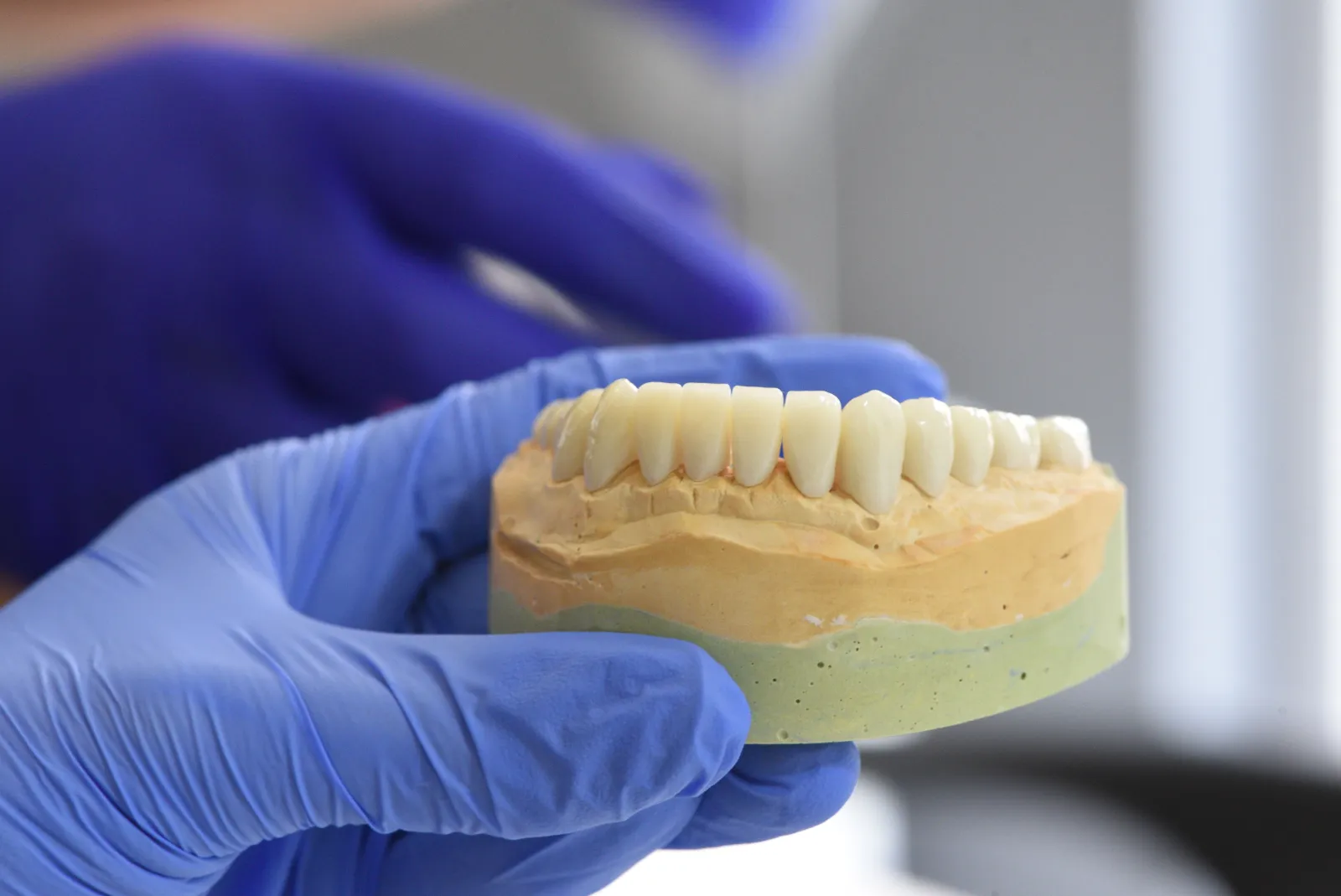
Do Veneers Ruin Your Natural Teeth?
No, but porcelain veneers are a real commitment. Most need a thin layer of enamel removed, and enamel does not grow back, so that tooth will always need a covering. Whether the preparation stays in enamel changes how well the veneer holds.
Read more